Free resources · GCSE Mandarin topics
GCSE Mandarin: Travel and tourism
Free vocabulary, grammar and Higher model answers with exam tips for the GCSE Mandarin topic “Travel and tourism” (holidays, transport and places to visit). Click a section to open it.
Key vocabulary
| Chinese | Pinyin | English |
|---|---|---|
| Transport | ||
| 坐 | zuò | to sit; to travel by |
| 骑 | qí | to ride on |
| 开车 | kāichē | to drive |
| 汽车 | qìchē | car |
| 公共汽车 | gōnggòng qìchē | bus |
| 旅游车 | lǚ yóu chē | coach |
| 出租车 | chūzūchē | taxi |
| 火车 | huǒchē | train |
| 地铁 | dìtiě | underground (tube) |
| 飞机 | fēijī | plane |
| 船 | chuán | boat, ship |
| 自行车 | zìxíngchē | bicycle |
| 马路 | mǎlù | road |
| 十字路口 | shízì lùkǒu | crossroads |
| 红绿灯 | hónglǜ dēng | traffic lights |
| 安全带 | ānquándài | seat belt |
| Tickets and journeys | ||
| 票 | piào | ticket |
| 单程票 | dānchéng piào | single ticket |
| 往返票 | wǎngfǎn piào | return ticket |
| 半价 | bànjià | half price |
| 站台 | zhàntái | platform |
| 出发 | chūfā | departure |
| 到达 | dàodá | arrival |
| 目的地 | mùdìdì | destination |
| 省钱 | shěngqián | to save money |
| 方便 | fāngbiàn | convenient |
| 麻烦 | máfan | troublesome |
| Holidays | ||
| 度假 | dùjià | to go on holiday |
| 旅行 | lǚxíng | to travel |
| 暑假 | shǔjià | summer holiday |
| 寒假 | hánjià | winter holiday |
| 订飞机票 | dìng fēijīpiào | to book a plane ticket |
| 单人房 | dānrén fáng | single room |
| 双人房 | shuāngrén fáng | double room |
| 设备 | shèbèi | equipment |
| 登记表 | dēngjì biǎo | registration form |
| 旅行袋 | lǚxíng dài | travel bag |
| 护照 | hùzhào | passport |
| 地图 | dìtú | map |
| 买纪念品 | mǎi jìniànpǐn | to buy souvenirs |
| 晒太阳 | shài tàiyáng | to sunbathe |
| 见面 | jiànmiàn | to meet |
| 等 | děng | to wait for |
| 迷路 | mílù | to get lost |
| 丢 | diū | to lose |
| 信用卡 | xìnyòngkǎ | credit card |
| 现金 | xiànjīn | cash |
| 第一次 | dì yī cì | (for the) first time |
| 旅游 | lǚyóu | to travel; tourism |
| 导游 | dǎoyóu | tour guide |
| 玩儿得很开心 | wánr de hěn kāixīn | to have a great time |
| 拍照片 | pāi zhàopiàn | to take photos |
| 照照片 | zhào zhàopiàn | to take photos |
| Holiday weather | ||
| 天气预报 | tiānqì yùbào | weather forecast |
| 温度 | wēndù | temperature |
| 零下 | língxià | below zero |
| 转 | zhuǎn | to turn into (weather: … becoming …) |
| 晴转多云 | qíng zhuǎn duōyún | sunny, becoming cloudy |
| Directions | ||
| 请问 | qǐngwèn | excuse me |
| 去…怎么走? | qù …zěnme zǒu ? | how do I get to …? |
| 向左拐 | xiàng zuǒ guǎi | turn left |
| 向右拐 | xiàng yòu guǎi | turn right |
| 向前走 | xiàng qián zǒu | go straight on |
| 在旁边 | zài pángbiān | beside |
| 东 | dōng | east |
| 西 | xī | west |
| 南 | nán | south |
| 北 | běi | north |
| Countries and continents | ||
| 英国 | yīngguó | UK |
| 中国 | zhōngguó | China |
| 法国 | fǎguó | France |
| 德国 | déguó | Germany |
| 美国 | měiguó | US |
| 日本 | rìběn | Japan |
| 印度 | yìndù | India |
| 西班牙 | xī bān yá | Spain |
| 巴基斯坦 | bā jī sī tǎn | Pakistan |
| 澳大利亚 | ào dà lì yà | Australia |
| 新加坡 | xīnjiāpō | Singapore |
| 台湾 | táiwān | Taiwan |
| 香港 | xiānggǎng | Hong Kong |
| 欧洲 | ōuzhōu | Europe |
| 亚洲 | yàzhōu | Asia |
| 非洲 | fēizhōu | Africa |
| 北美洲 | běiměi zhōu | North America |
| 南美洲 | nánměi zhōu | South America |
| 中国人 | zhōng guó rén | Chinese (people/nationality) |
| 日本人 | rì běn rén | Japanese (people/nationality) |
| Places in China | ||
| 有名 | yǒumíng | famous |
| 参观 | cānguān | to visit |
| 北京 | běijīng | Beijing |
| 上海 | shànghǎi | Shanghai |
| 西安 | xīān | Xi’an |
| 广州 | guǎngzhōu | Guangzhou |
| 长城 | chángchéng | Great Wall |
| 故宫 | gùgōng | Forbidden City |
| 天安门 | Tiānānmén | Tiananmen (Gate) |
| 天安门广场 | tiān ān mén guǎng chǎng | Tiananmen Square |
| 天坛 | tiāntán | Temple of Heaven |
| 鸟巢 | niǎocháo | Bird’s Nest |
| 钟楼 | zhōnglóu | Bell Tower |
| 兵马俑 | bīng mǎ yǒng | Terracotta Army |
| 熊猫 | xióngmāo | panda |
| 开门 | kāimén | to open/opening |
| 关门 | guānmén | to close/closing |
| 名胜古迹 | míngshèng gǔjì | famous sights and historic sites |
Grammar and complex structures
Use these in your speaking and writing.
| Structure | Meaning | Example for this topic |
|---|---|---|
| 是……的 | stresses when / where / how a past action happened | 我们是坐飞机去的。 We went by plane. |
| verb + 过 | have done before (experience) | 我去过法国,可是没去过中国。 I have been to France, but never to China. |
| 先……然后…… | first … then … | 我们先坐火车去北京,然后去上海。 We first took the train to Beijing, then went to Shanghai. |
| A 比 B + adj | A is more … than B | 坐火车比坐飞机舒服。 Going by train is more comfortable than flying. |
| 与其……不如…… | rather than … it is better to … | 与其坐飞机,不如坐火车,因为可以看风景。 Rather than flying, it’s better to take the train, because you can see the scenery. |
| 如果……就…… | if … then … | 如果下雨,我们就去参观博物馆。 If it rains, we will visit a museum. |
| 总的来说 | overall, in summary | 总的来说,那次旅行非常有意思。 Overall, that trip was really interesting. |
Speaking questions and model answers
Try answering each question yourself first, then click it to see a Higher model answer and an exam tip.
Photo card
The photo card task follows the AQA format, but the same skills are useful for the picture-based task in the Pearson Edexcel GCSE Chinese speaking exam.
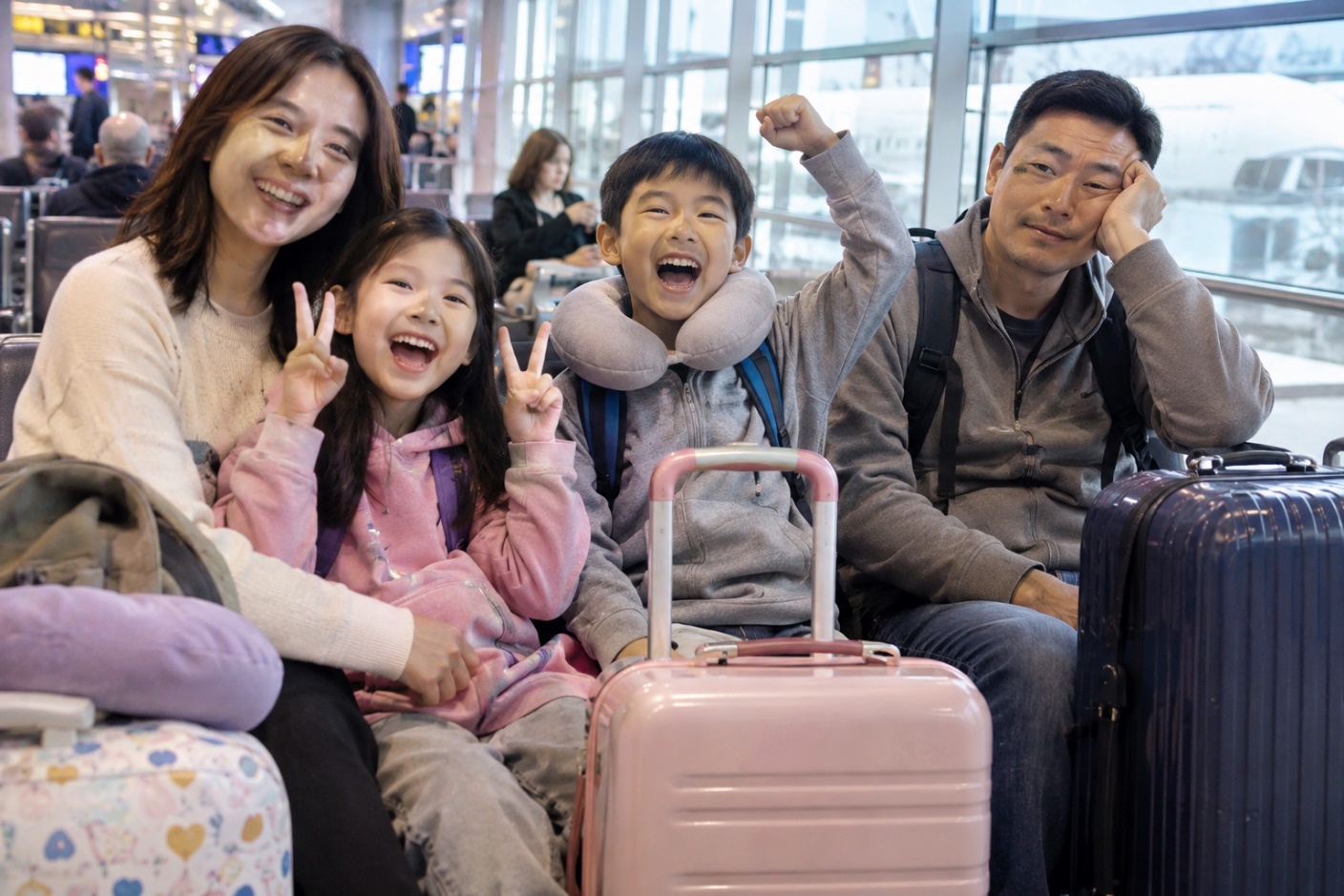
A photo of a man, a woman and two children with travel bags.
Photo card照片里有什么?What is in the photo? Show model answer
照片里有四个人:一个男人、一个女人和两个孩子。他们带着很多旅行袋。我觉得他们要去度假,因为他们有很多旅行袋。孩子们看起来很高兴,因为他们在笑。
In the photo there are four people: a man, a woman and two children. They have lots of travel bags. I think they are going on holiday, because they have lots of bags. The children look very happy, because they are smiling.
Exam tip: Describe only what you can see. Complex structures: verb + 着 (他们带着很多旅行袋), 看起来…… (孩子们看起来很高兴), and 我觉得……,因为…… to give a reason for your guess.
Edexcel tip: Describe what you can see in the picture first, and read each question carefully for key words.
General conversation
Questions your teacher may ask about this topic.
General conversation你喜欢怎么去旅行?为什么?How do you like to travel? Why? Show model answer
我喜欢坐火车旅行,因为坐火车比坐飞机舒服,而且可以一边看风景一边听音乐。去年我们坐火车去了法国,又快又方便。不过,如果去中国,我们就坐飞机。
I like travelling by train, because it is more comfortable than flying, and you can look at the view while listening to music. Last year we went to France by train; it was fast and convenient. But if we go to China, we take the plane.
Exam tip: Complex structures: A 比 B + adjective (坐火车比坐飞机舒服), ……,而且……, 一边……一边…… (一边看风景一边听音乐), 又……又…… (又快又方便), 如果……就…… (如果去中国,我们就坐飞机).
General conversation去年暑假你去了哪儿?Where did you go last summer? Show model answer
去年暑假我跟家人去了西班牙。我们是坐飞机去的,在海边住了一个星期。我们不但每天游泳、晒太阳,而且还买了很多纪念品。有一天我们迷路了,可是一个很友好的人帮助了我们。明年暑假我们打算去法国。
Last summer I went to Spain with my family. We went by plane and stayed by the sea for a week. We not only swam and sunbathed every day, but we also bought lots of souvenirs. One day we got lost, but a very friendly person helped us. Next summer we plan to go to France.
Exam tip: Complex structures: 是……的 (是坐飞机去的), 不但……而且还…… (不但每天游泳、晒太阳,而且还买了很多纪念品), ……,可是…… (contrast). Time frames: past (去了, 住了, 迷路了) and future (明年暑假我们打算……). Vocabulary: 晒太阳, 纪念品, 迷路.
General conversation你去过中国吗?Have you ever been to China? Show model answer
我去过一次中国。两年前我和老师同学去了北京,在那儿住了十天。我们不但参观了长城和故宫,而且还吃了北京烤鸭。那次旅行让我更喜欢学中文了。将来我还想去上海和西安。
I have been to China once. Two years ago I went to Beijing with my teachers and classmates and stayed for ten days. We not only visited the Great Wall and the Forbidden City, but we also ate Peking duck. That trip made me like learning Chinese even more. In the future I want to go to Shanghai and Xi’an too.
Exam tip: Complex structures: verb + 过 (去过), 不但……而且还…… (不但参观了长城和故宫,而且还吃了北京烤鸭), 让 + person + verb (让我更喜欢学中文了). Time frames: past (两年前……) and future (将来我还想……).
General conversation明年你打算去哪儿度假?Where are you planning to go on holiday next year? Show model answer
去年我去了德国,那里的风景非常漂亮。明年夏天我打算和朋友再去一次德国。我们打算先坐火车去城市参观,然后去山区爬山。如果下雨,我们就去参观博物馆。
I went to Germany last year, and the scenery was beautiful. Next summer I plan to go to Germany again with my friends. We plan to take the train to visit a city first, then go hiking in the mountains. If it rains, we will visit museums.
Exam tip: Complex structures: 再 + verb + 一次 (再去一次德国 – “go again”), 先……然后…… (先坐火车去城市参观,然后去山区爬山), 如果……就…… (如果下雨,我们就去参观博物馆). Time frames: past (去年我去了德国) and future (明年夏天我打算……).
More general conversation questions to practise
- 你想和家人一起旅行还是和朋友一起旅行?为什么? (Would you rather travel with family or friends? Why?)
- 旅行的时候,你喜欢买纪念品吗? (Do you like buying souvenirs when you travel?)
- 你小时候常常去哪儿度假?现在呢? (Where did you often go on holiday when you were little? What about now?)
- 上次旅行的时候,你去了哪儿?做了什么? (Where did you go on your last trip? What did you do?)
- 下个周末你想去哪儿玩? (Where do you want to go next weekend?)
- 你最喜欢去哪儿旅行? (Where do you like travelling to most?)
Questions about this topic
What does the topic “Travel and tourism” cover in GCSE Mandarin?
It covers holidays, transport and places to visit. The topic can come up in speaking, writing, reading and listening, so learn the vocabulary and practise the speaking questions out loud.
What is the difference between the photo card and the general conversation?
In the photo card task you describe a photo and answer questions about it. In the general conversation your teacher asks questions about the topic, and you should give opinions, reasons and use past, present and future time frames. This page has model answers for both.
How can I make my answers sound more advanced?
Give opinions with reasons, use past, present and future time frames, join ideas with connectives such as 虽然……但是……, and add specific details or examples.