Free resources · GCSE Mandarin topics
GCSE Mandarin: Me, my family and friends
Free vocabulary, grammar and Higher model answers with exam tips for the GCSE Mandarin topic “Me, my family and friends” (relationships with family and friends; marriage and partnership). Click a section to open it.
Key vocabulary
| Chinese | Pinyin | English |
|---|---|---|
| Family members | ||
| 家 | jiā | family |
| 家人 | jiārén | family members |
| 全家 | quánjiā | whole family |
| 爸爸 | bàba | dad |
| 父亲 | fùqīn | father |
| 妈妈 | māma | mum |
| 母亲 | mǔqīn | mother |
| 哥哥 | gēge | older brother |
| 姐姐 | jiějie | older sister |
| 弟弟 | dìdi | younger brother |
| 妹妹 | mèimei | younger sister |
| 爷爷 | yéye | grandfather |
| 奶奶 | nǎinai | grandmother |
| 孙子 | sūnzi | grandson |
| 孙女 | sūnnǚ | granddaughter |
| 儿子 | érzi | son |
| 女儿 | nǚ’ér | daughter |
| 叔叔 | shūshu | uncle |
| 阿姨 | āyí | aunt |
| 亲戚 | qīnqi | relatives |
| 孩子 | háizi | child |
| 男孩 | nánhái | boy |
| 女孩 | nǚhái | girl |
| 独生子 | dúshēngzǐ | only child |
| 成人 | chéngrén | adult, grown-up |
| 先生 | xiānsheng | Mr.; husband |
| 太太 | tàitai | Mrs.; wife |
| Personal details | ||
| 名字 | míngzi | name |
| 年纪 | niánjì | age |
| 岁 | suì | years old |
| 生日 | shēngrì | birthday |
| 电话号码 | diànhuà hàomǎ | telephone number |
| 地址 | dìzhǐ | address |
| 护照 | hùzhào | passport |
| 身份证 | shēnfènzhèng | identity card |
| 出生日期 | chūshēng rìqī | date of birth |
| 出生地点 | chūshēng dìdiǎn | place of birth |
| 性别 | xìngbié | gender |
| Pronouns | ||
| 我 | wǒ | I, me |
| 你 | nǐ | you |
| 他 | tā | he, him |
| 她 | tā | she, her |
| 它 | tā | it |
| 我们 | wǒmen | we, us |
| 你们 | nǐmen | you (plural) |
| 他们 | tāmen | they |
| 我的 | wǒ de | my, mine |
| 你的 | nǐ de | your |
| 他的 | tā de | his |
| 她的 | tā de | her, hers |
| 它的 | tā de | its |
| 我们的 | wǒmen de | our, ours |
| 你们的 | nǐmen de | your, yours |
| 他们的 | tāmen de | their, theirs |
| Appearance and the body | ||
| 高 | gāo | tall; high |
| 矮 | ǎi | short |
| 胖 | pàng | fat |
| 瘦 | shòu | thin |
| 长 | cháng | long |
| 短 | duǎn | short |
| 好看 | hǎokàn | good looking |
| 漂亮 | piàoliang | pretty, beautiful |
| 美丽 | měilì | beautiful |
| 帅 | shuài | handsome, smart |
| 头 | tóu | head |
| 头发 | tóufa | hair |
| 脸 | liǎn | face |
| 眼睛 | yǎnjīng | eyes |
| 鼻子 | bízi | nose |
| 嘴 | zuǐ | mouth |
| 耳朵 | ěrduo | ear |
| 牙 | yá | tooth |
| 手 | shǒu | hand |
| 手臂 | shǒubì | arm |
| 肚子 | dùzi | stomach, tummy |
| 背 | bèi | back |
| 腿 | tuǐ | leg |
| 脚 | jiǎo | foot |
| Personality | ||
| 聪明 | cōngming | clever |
| 友好 | yǒuhǎo | friendly |
| 安静 | ānjìng | quiet |
| 亲切 | qīnqiè | kind, warm |
| 幽默 | yōumò | humorous |
| 有趣 | yǒuqù | interesting, amusing |
| 好玩儿 | hǎowánr | fun |
| 可爱 | kěài | cute, lovable |
| 酷 | kù | cool |
| 快乐 | kuàilè | happy |
| 严肃 | yánsù | serious |
| 严格 | yángé | strict |
| 有礼貌 | yǒu lǐmào | polite |
| 懒 | lǎn | lazy |
| 笨 | bèn | stupid, slow |
| 生气 | shēngqì | angry |
| Pets | ||
| 宠物 | chǒngwù | pet |
| 猫 | māo | cat |
| 狗 | gǒu | dog |
| 马 | mǎ | horse |
| 兔子 | tùzi | rabbit |
| 鸟 | niǎo | bird |
| 鱼 | yú | fish |
| 蛇 | shé | snake |
| 只 | zhī | measure word for animals and birds |
| 条 | tiáo | measure word for long, thin things (fish, snakes, trousers) |
| Friends and relationships | ||
| 朋友 | péngyou | friend |
| 笔友 | bǐyǒu | penfriend |
| 男朋友 | nánpéngyou | boyfriend |
| 女朋友 | nǚpéngyou | girlfriend |
| 客人 | kèren | guest |
| 结婚 | jiéhūn | to get married; married |
| 未婚 | wèihūn | unmarried |
| 离婚 | líhūn | divorced |
| 婚礼 | hūnlǐ | wedding |
| Likes and dislikes | ||
| 我很喜欢 | wǒ hěn xǐhuan | I like… (very much) |
| 我很讨厌 | wǒ hěn tǎoyàn | I can’t stand…/I don’t like |
Grammar and complex structures
Use these in your speaking and writing.
| Structure | Meaning | Example for this topic |
|---|---|---|
| 又……又…… | both … and … | 我妈妈又幽默又漂亮。 My mum is both funny and pretty. |
| 不但……而且…… | not only … but also … | 我爸爸不但很聪明,而且很亲切。 My dad is not only clever but also kind. |
| A 比 B + adj + 一点儿 | A is a bit more … than B | 我哥哥比我高一点儿。 My older brother is a bit taller than me. |
| A 跟 B 一样 | A is the same as B | 我跟我妹妹一样喜欢猫。 Like my younger sister, I love cats. |
| 是……的 | stresses when / where / how a past action happened | 我们是在小学认识的。 We met at primary school. |
| ……的时候 | when … | 我有问题的时候,我妈妈总是帮助我。 When I have a problem, my mum always helps me. |
| 依我来看 | as far as I’m concerned | 依我来看,好朋友应该帮助我。 As far as I’m concerned, a good friend should help me. |
| 如果……就…… | if … then … | 如果我结婚,我就要两个孩子。 If I get married, I would like to have two children. |
Speaking questions and model answers
Try answering each question yourself first, then click it to see a Higher model answer and an exam tip.
Photo card
The photo card task follows the AQA format, but the same skills are useful for the picture-based task in the Pearson Edexcel GCSE Chinese speaking exam.
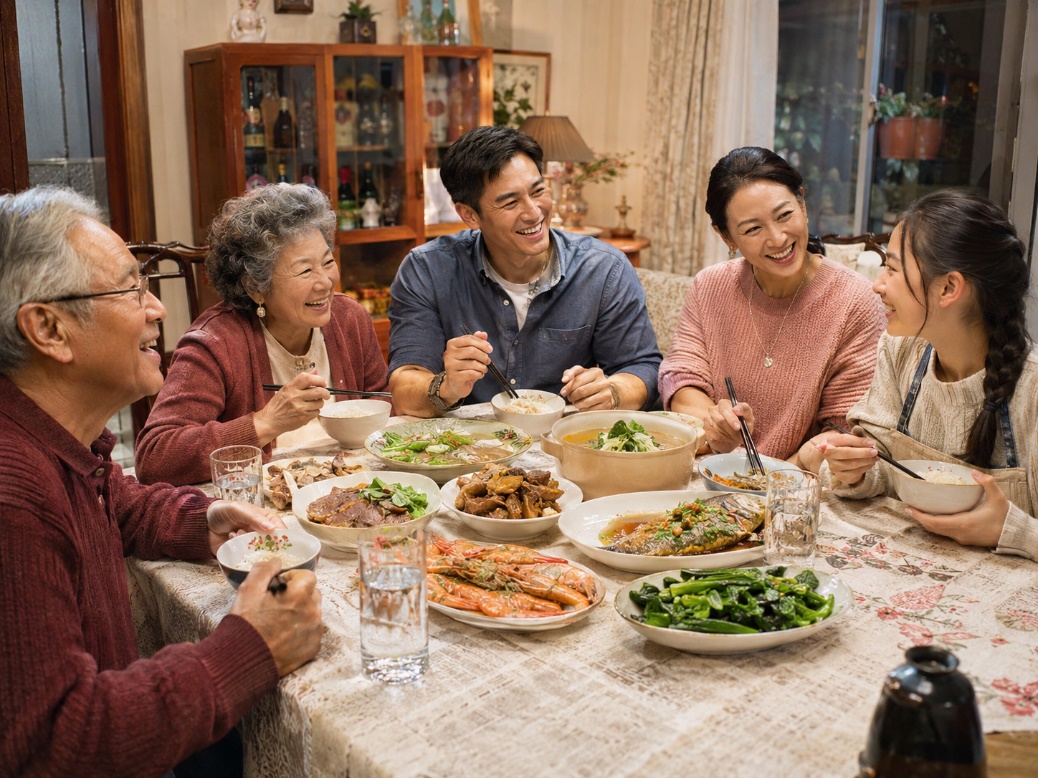
A photo of five people eating together at a table.
Photo card照片里有什么?What is in the photo? Show model answer
照片里有五个人:两个男人,两个女人和一个女孩。他们正在一起吃饭,桌子上有很多菜。看起来他们的关系很好,因为他们一边吃饭一边聊天,而且都在笑。
In the photo there are five people: two men, two women and a girl. They are eating together and there are lots of dishes on the table. Their relationship looks good, because they are chatting while they eat, and they are all laughing.
Exam tip: Describe who, where and what they are doing, but don’t assume their relationship, then add an opinion. 一边……一边…… and 看起来 (it looks as if) lift a simple description, but you must justify it with a reason starting with 因为. Don’t write about things you can’t see in the photo.
Edexcel tip: Describe what you can see in the picture first, and read each question carefully for key words.
General conversation
Questions your teacher may ask about this topic.
General conversation你和家人的关系怎么样?How do you get on with your family? Show model answer
总的来说,我跟家人的关系很好。我妈妈又幽默又漂亮,我有问题的时候,她总是帮助我。我爸爸不但很聪明,而且很亲切,我们喜欢一起看电影。我爱我的家人。
Overall, I have a good relationship with my family. My mum is both funny and pretty, and she always helps me when I have a problem. My dad is not only clever but also kind, and we like watching films together. I love my family.
Exam tip: Complex structures: 又……又……, 不但……而且……, ……的时候. Start with 总的来说 (overall) to sound fluent.
General conversation上个周末你和家人做了什么?What did you do with your family last weekend? Show model answer
因为上个周末是我爷爷的生日,所以我和家人一起去了一个中国饭馆。我们不但吃了饺子和面条,而且还给爷爷买了礼物。那天我非常快乐,因为我们全家都喜欢中国菜。下个周末我们打算一起去海边玩。
Because last weekend was my grandad’s birthday, my family and I went to a Chinese restaurant together. We not only ate dumplings and noodles but also bought Grandad presents. I was very happy that day, because our whole family loves Chinese food. Next weekend we plan to go to the seaside together.
Exam tip: Complex structures: 因为……所以……, 不但……而且……. Time frames: past with 了 (去了, 吃了, 买了) and future with 打算 (下个周末我们打算……).
General conversation你将来想结婚吗?为什么?Would you like to get married in the future? Why? Show model answer
我将来想结婚,因为我想有自己的家。我爸爸妈妈是在大学认识的,他们结婚二十年了。他们不但常常一起做饭,而且常常一起去旅行,所以我觉得结婚很好。如果我结婚,我就要两个孩子。
I would like to get married in the future because I want my own family. My parents met at university and have been married for twenty years. They not only often cook together but also often travel together, so I think marriage is good. If I get married, I would like to have two children.
Exam tip: Complex structures: 是……的 (是在大学认识的), 不但……而且……, 如果……就……. Time frames: past (是在大学认识的, 结婚二十年了) and future (我将来想结婚).
General conversation你觉得好朋友应该是什么样的?What do you think a good friend should be like? Show model answer
依我来看,好朋友应该很友好,也应该帮助我。我最好的朋友叫Amy,我们是在小学认识的。她又聪明又幽默。上个星期我生病了,她不但给我打电话,而且还帮我买东西。我们下个周末想一起去电影院看电影。
As far as I’m concerned, a good friend should be friendly and should help me. My best friend is called Amy; we met at primary school. She is both clever and funny. Last week I was ill, and she not only phoned me but also did some shopping for me. Next weekend we want to go to the cinema together to watch a film.
Exam tip: Complex structures: 是……的, 又……又……, 不但……而且……. Opinion phrase: 依我来看. Time frames: past (上个星期我生病了) and future (我们下个周末想……).
More general conversation questions to practise
- 你家有几口人?他们的爱好是什么? (How many people are there in your family? What are their hobbies?)
- 你有宠物吗?它叫什么名字? (Do you have a pet? What is it called?)
- 你喜欢跟家人还是跟朋友一起去度假?为什么? (Do you prefer going on holiday with your family or your friends? Why?)
- 你上个假期和家人/朋友一起去了哪儿? (Where did you go with your family / friends on your last holiday?)
- 你下个周末想和家人/朋友去做什么? (What do you want to do with your family / friends next weekend?)
- 你觉得做独生子好还是有兄弟姐妹好? (Do you think it is better to be an only child or to have brothers and sisters?)
Questions about this topic
What does the topic “Me, my family and friends” cover in GCSE Mandarin?
It covers relationships with family and friends; marriage and partnership. The topic can come up in speaking, writing, reading and listening, so learn the vocabulary and practise the speaking questions out loud.
What is the difference between the photo card and the general conversation?
In the photo card task you describe a photo and answer questions about it. In the general conversation your teacher asks questions about the topic, and you should give opinions, reasons and use past, present and future time frames. This page has model answers for both.
How can I make my answers sound more advanced?
Give opinions with reasons, use past, present and future time frames, join ideas with connectives such as 虽然……但是……, and add specific details or examples.