Free resources · GCSE Mandarin topics
GCSE Mandarin: Free-time activities
Free vocabulary, grammar and Higher model answers with exam tips for the GCSE Mandarin topic “Free-time activities” (music; cinema and tv; food and eating out; sport). Click a section to open it.
Key vocabulary
| Chinese | Pinyin | English |
|---|---|---|
| Sport | ||
| 运动 | yùndòng | sport |
| 做运动 | zuò yùndòng | to do sport |
| 锻炼 | duànliàn | to work out |
| 踢足球 | tī zúqiú | to play football |
| 打篮球 | dǎ lán qiú | to play basketball |
| 打羽毛球 | dǎ yǔmáoqiú | to play badminton |
| 打乒乓球 | dǎ pīng pāng qiú | to play table tennis |
| 打网球 | dǎ wǎng qiú | to play tennis |
| 打球 | dǎqiú | to play ball games |
| 打太极拳 | dǎ tàijíquán | to do tai chi |
| 跑步 | pǎobù | to run |
| 游泳 | yóuyǒng | to swim |
| 爬山 | páshān | to climb mountains, to go hiking |
| 钓鱼 | diàoyú | to go fishing |
| 散步 | sànbù | to go for a walk |
| 玩滑板 | wán huábǎn | to skateboard |
| 去健身房 | qù jiànshēnfáng | to go to the gym |
| 练体操 | liàn tǐcāo | to practise gymnastics |
| 滑雪 | huáxuě | to ski |
| 滑冰 | huábīng | to ice skate |
| Competitions | ||
| 比赛 | bǐsài | competition |
| 队员 | duìyuán | team member |
| 参加 | cānjiā | to take part in |
| 得奖牌 | dé jiǎng pái | to win a medal |
| 成功 | chénggōng | to succeed |
| Music and the arts | ||
| 听音乐 | tīng yīnyuè | to listen to music |
| 唱歌 | chànggē | to sing |
| 跳舞 | tiàowǔ | to dance |
| 流行歌曲 | liúxíng gēqǔ | pop song |
| 弹吉他 | tán jítā | to play the guitar |
| 弹钢琴 | tán gāngqín | to play the piano |
| 乐器 | yuèqì | musical instrument |
| 演出 | yǎnchū | to perform |
| 表演 | biǎoyǎn | to perform; performance |
| 画画儿 | huà huàr | to draw, to paint |
| 看京剧 | kàn jīngjù | to watch Beijing opera |
| Cinema, TV and reading | ||
| 看电视 | kàn diànshì | to watch TV |
| 看电影 | kàn diànyǐng | to watch a film |
| 去电影院 | qù diànyǐngyuàn | to go to the cinema |
| 电视节目 | diànshì jiémù | TV programme |
| 电视剧 | diànshìjù | TV drama |
| 动画片 | dòng huà piàn | cartoon |
| 新闻 | xīnwén | news |
| 赛马 | sàimǎ | horse racing |
| 赛车 | sàichē | car racing |
| 名人 | míngrén | celebrity |
| 影迷 | yǐngmí | film fan |
| 杂志 | zázhì | magazine |
| 报纸 | bàozhǐ | newspaper |
| 书 | shū | book |
| 看书 | kànshū | to read |
| 看小说 | kàn xiǎoshuō | to read a novel |
| 写日记 | xiě rìjì | to write a diary |
| Going out | ||
| 爱好 | àihào | hobby |
| 有空 | yǒukòng | to have free time |
| 交朋友 | jiāo péngyou | to make friends |
| 请 | qǐng | to invite |
| 买东西 | mǎi dōngxi | to go shopping |
| 参观博物馆 | cānguān bówùguǎn | to visit a museum |
| 购物中心 | gòuwùzhōngxīn | shopping centre |
| 花钱 | huāqián | to spend money |
| 买票 | mǎipiào | to buy a ticket |
| 遛狗 | liùgǒu | to walk a dog |
| 照相 / 拍照 | zhàoxiàng / pāizhào | to take a photo |
| 照片 | zhàopiàn | photograph |
| Food | ||
| 米饭 | mǐfàn | rice |
| 饭 | fàn | meal; cooked rice |
| 面条 | miàntiáo | noodles |
| 面包 | miànbāo | bread |
| 饺子 | jiǎozi | dumpling |
| 包子 | bāozi | steamed stuffed bun |
| 炒饭 | chǎofàn | fried rice |
| 炒面 | chǎomiàn | fried noodles |
| 点心 | diǎnxīn | dim sum, snacks |
| 肉 | ròu | meat |
| 牛肉 | niúròu | beef |
| 猪肉 | zhūròu | pork |
| 鸡肉 | jīròu | chicken |
| 鸭肉 | yāròu | duck meat |
| 羊肉 | yángròu | lamb/mutton |
| 鱼 | yú | fish |
| 海鲜 | hǎixiān | seafood |
| 鸡蛋 | jīdàn | egg |
| 菜 | cài | dish; vegetables |
| 蔬菜 / 青菜 | shūcài / qīngcài | vegetable |
| 白菜 | báicài | cabbage |
| 西红柿 | xī hóng shì | tomato |
| 汤 | tāng | soup |
| 蛋糕 | dàngāo | cake |
| 巧克力 | qiǎo kè lì | chocolate |
| 冰淇淋 | bīng qí lí n | ice cream |
| 比萨饼 | bǐ sà bǐng | pizza |
| 烤 | kǎo | to roast |
| Fruit | ||
| 水果 | shuǐguǒ | fruit |
| 苹果 | píngguǒ | apple |
| 橙子 | chéngzi | orange |
| 香蕉 | xiāngjiāo | banana |
| 西瓜 | xīguā | watermelon |
| 葡萄 | pútáo | grapes |
| 草莓 | cǎoméi | strawberry |
| Drinks | ||
| 茶 | chá | tea |
| 咖啡 | kāfēi | coffee |
| 牛奶 | niúnǎi | milk |
| 水 | shuǐ | water |
| 汽水 | qìshuǐ | fizzy drink |
| 果汁 | guǒzhī | fruit juice |
| 酒 | jiǔ | alcohol |
| Meals and eating out | ||
| 早饭 | zǎofàn | breakfast |
| 午饭 | wǔfàn | lunch |
| 晚饭 | wǎnfàn | dinner |
| 饭馆 | fànguǎn | restaurant |
| 饭店 | fàndiàn | restaurant |
| 咖啡厅 | kā fēi tīng | café |
| 菜单 | càidān | menu |
| 点 | diǎn | to order (food) |
| 点菜 | diǎncài | to order food |
| 做饭 | zuòfàn | to cook food |
| 筷子 | kuàizi | chopsticks |
| 好吃 | hǎochī | delicious |
| 难吃 | nánchī | tastes bad |
Grammar and complex structures
Use these in your speaking and writing.
| Structure | Meaning | Example for this topic |
|---|---|---|
| 除了……以外,还…… | apart from …, also … | 除了游泳以外,我还喜欢打羽毛球。 Apart from swimming, I also like badminton. |
| verb + 得 + adj | how well someone does something | 我弹吉他弹得不错。 I play the guitar quite well. |
| 一边……一边…… | doing two things at the same time | 我常常一边吃饭一边看电视。 I often watch TV while eating. |
| A 比 B + adj | A is more … than B | 在电影院看电影比在家看有意思。 Watching films at the cinema is more fun than at home. |
| 与其……不如…… | rather than … it is better to … | 与其在家看电视,不如去公园踢足球。 Rather than watching TV at home, it’s better to play football in the park. |
| 我更喜欢…… | I prefer … | 我喜欢看电视,可是我更喜欢看电影。 I like watching TV, but I prefer films. |
| 比如说…… | for example … | 我喜欢很多中国菜,比如说饺子和北京烤鸭。 I like lots of Chinese dishes, for example dumplings and Peking duck. |
Speaking questions and model answers
Try answering each question yourself first, then click it to see a Higher model answer and an exam tip.
Photo card
The photo card task follows the AQA format, but the same skills are useful for the picture-based task in the Pearson Edexcel GCSE Chinese speaking exam.
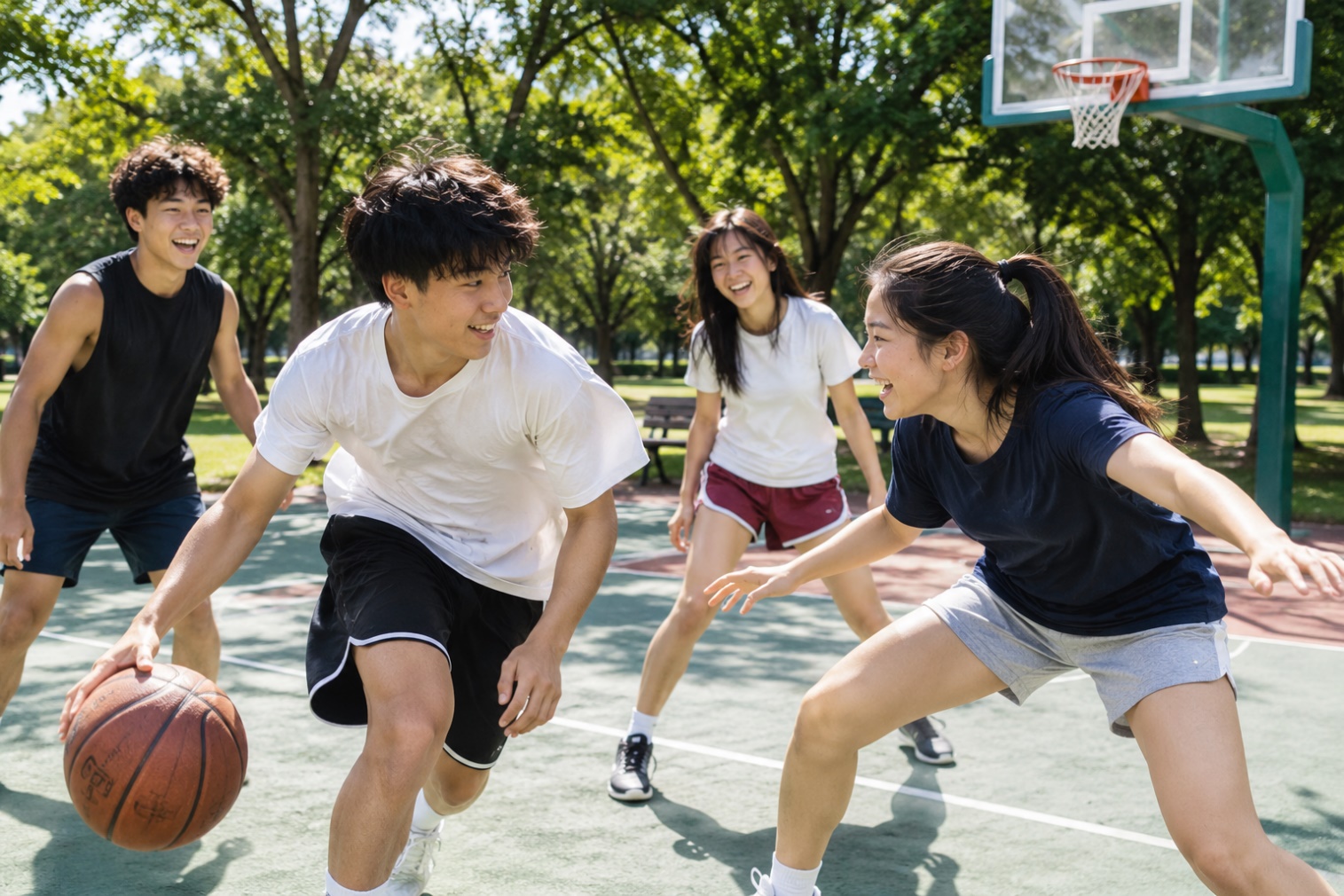
A photo of four young people playing basketball in a park.
Photo card照片里有什么?What is in the photo? Show model answer
照片里有四个年轻人,两个男孩和两个女孩,他们在公园里打篮球。天气很好,是晴天。他们看起来很快乐,因为他们都在笑。我觉得打篮球对身体很好,我也喜欢和朋友一起做运动。
In the photo there are four young people, two boys and two girls, playing basketball in a park. The weather is nice; it is sunny. They look very happy, because they are all smiling. I think playing basketball is very good for you, and I also like doing sport with my friends.
Exam tip: Say who, where and what they are doing, then add the weather. Justify 看起来很快乐 with 因为 and something you can see, and finish with your own opinion (我觉得……).
Edexcel tip: Describe what you can see in the picture first, and read each question carefully for key words.
General conversation
Questions your teacher may ask about this topic.
General conversation你有空的时候喜欢做什么?What do you like doing in your free time? Show model answer
我有空的时候喜欢运动,特别是游泳和打羽毛球,因为运动对身体好。除了运动以外,我还喜欢弹吉他。我弹吉他弹得不错,我的朋友都说我弹得很好。
In my free time I like sport, especially swimming and badminton, because exercise is good for you. Apart from sport, I also like playing the guitar. I play the guitar quite well; my friends all say I play very well.
Exam tip: Complex structures: 除了……以外,还……, verb + 得 (弹吉他弹得不错), ……的时候.
General conversation你最近看了什么电影?What film have you seen recently? Show model answer
上个周末我和哥哥去电影院看了一个美国电影。虽然电影有点儿长,但是很有意思。看电影以后,我们去吃了比萨饼。我觉得在电影院看电影比在家看有意思。下个周末我们打算去看一个中国电影。
Last weekend my brother and I went to the cinema to see an American film. Although it was a bit long, it was very good. After the film we went for pizza. I think watching films at the cinema is more fun than at home. Next weekend we plan to see a Chinese film.
Exam tip: Complex structures: 虽然……但是……, A 比 B + adjective, ……以后. Time frames: past (看了, 吃了) and future (下个周末我们打算……).
General conversation你喜欢吃什么?你常常出去吃饭吗?What do you like to eat? Do you often eat out? Show model answer
我很喜欢吃中国菜,特别是北京烤鸭和饺子。我们家不常常去饭馆吃饭,因为太贵了,一般一个月去一次。上个星期六我们去吃了火锅,又好吃又便宜。下个月是我妈妈的生日,我们打算去一家有名的中国饭馆。
I love Chinese food, especially Peking duck and dumplings. My family doesn’t often eat out because it is too expensive; we usually go once a month. Last Saturday we had hotpot, which was both tasty and cheap. Next month is my mum’s birthday, and we plan to go to a famous Chinese restaurant.
Exam tip: Complex structures: 又……又……, 因为……. Frequency: 一个月去一次. Time frames: past (上个星期六我们去吃了火锅) and future (我们打算……).
General conversation你将来想学什么新爱好?What new hobby would you like to take up in the future? Show model answer
小时候我学过弹钢琴,可是我不太喜欢。将来我想学打太极拳,因为太极拳对身体好,也很有意思。如果以后有机会,我就去中国看京剧。
When I was little I learned the piano, but I didn’t really like it. In the future I want to learn tai chi, because it is good for you and very interesting. If I have the chance in the future, I will go to China to see Beijing opera.
Exam tip: Complex structures: verb + 过 (学过), 如果……就……. Time frames: past (小时候我学过……) and future (将来我想学……).
More general conversation questions to practise
- 你喜欢听什么音乐?为什么? (What music do you like? Why?)
- 你最喜欢的运动员是谁?为什么? (Who is your favourite sportsperson? Why?)
- 你小时候喜欢做什么?现在呢? (What did you like doing when you were little? What about now?)
- 上个周末你做了什么运动? (What sport did you do last weekend?)
- 下个周末你想做什么? (What do you want to do next weekend?)
- 如果你有很多钱,你想去看什么比赛? (If you had lots of money, what match would you like to go and see?)
- 你的爱好是什么?你一般什么时候运动? (What are your hobbies? When do you usually do sport?)
Questions about this topic
What does the topic “Free-time activities” cover in GCSE Mandarin?
It covers music; cinema and TV; food and eating out; sport. The topic can come up in speaking, writing, reading and listening, so learn the vocabulary and practise the speaking questions out loud.
What is the difference between the photo card and the general conversation?
In the photo card task you describe a photo and answer questions about it. In the general conversation your teacher asks questions about the topic, and you should give opinions, reasons and use past, present and future time frames. This page has model answers for both.
How can I make my answers sound more advanced?
Give opinions with reasons, use past, present and future time frames, join ideas with connectives such as 虽然……但是……, and add specific details or examples.