Free resources · GCSE Mandarin topics
GCSE Mandarin: Home, town, neighbourhood and region
Free vocabulary, grammar and Higher model answers with exam tips for the GCSE Mandarin topic “Home, town, neighbourhood and region” (where you live and what it is like). Click a section to open it.
Key vocabulary
| Chinese | Pinyin | English |
|---|---|---|
| Rooms | ||
| 房子 | fángzi | house |
| 层 | céng | floor |
| 楼上 | lóushàng | upstairs |
| 楼下 | lóuxià | downstairs |
| 门 | mén | door |
| 客厅 | kètīng | living room |
| 饭厅 | fàntīng | dining room |
| 厨房 | chúfáng | kitchen |
| 卧室 | wòshì | bedroom |
| 书房 | shūfáng | study |
| 浴室 | yùshì | bathroom |
| 厕所 | cèsuǒ | toilet |
| 花园 | huāyuán | garden |
| Furniture and things at home | ||
| 桌子 | zhuōzi | table |
| 椅子 | yǐzi | chair |
| 把 | bǎ | measure word for chairs |
| 床 | chuáng | bed |
| 柜子 | guìzi | wardrobe |
| 书架 | shūjià | bookcase |
| 灯 | dēng | light |
| 钟 | zhōng | clock |
| 电视 | diànshì | TV |
| 电话 | diànhuà | phone |
| 电脑 | diànnǎo | computer |
| 冰箱 | bīngxiāng | fridge |
| 洗衣机 | xǐ yī jī | washing machine |
| 炉子 | lúzi | cooker |
| 空调 | kōngtiáo | air conditioning |
| Places in town | ||
| 商店 | shāngdiàn | shop |
| 超市 | chāoshì | supermarket |
| 银行 | yínháng | bank |
| 邮局 | yóujú | post office |
| 电影院 | diànyǐngyuàn | cinema |
| 公园 | gōngyuán | park |
| 体育馆 | tǐyùguǎn | sports hall, stadium |
| 运动中心 | yùn dòng zhōng xīn | sports centre |
| 学校 | xuéxiào | school |
| 美术馆 | měishùguǎn | art gallery |
| 博物馆 | bówùguǎn | museum |
| 展览馆 | zhǎnlǎnguǎn | exhibition hall |
| 动物园 | dòngwùyuán | zoo |
| 汽车站 | qìchēzhàn | bus station |
| 火车站 | huǒ chē zhàn | train station |
| 地铁站 | dì tiě zhàn | underground station |
| Where I live | ||
| 地方 | dìfāng | place |
| 住在 | zhùzài | live in/at |
| 城市 | chéngshì | city |
| 小镇 | xiǎozhèn | small town |
| 郊区 | jiāoqū | suburb |
| 农村 | nóngcūn | countryside |
| 海边 | hǎibiān | seaside |
| 山区 | shānqū | mountain area |
| 树 | shù | tree |
| 湖 | hú | lake |
| 河 | hé | river |
| 空气 | kōngqì | air |
| 新鲜 | xīnxiān | fresh |
| 安静 | ānjìng | quiet |
| 热闹 | rènào | lively, bustling |
| 吵 | chǎo | noisy |
| 明信片 | míngxìnpiàn | postcard |
| Position | ||
| 前边 | qiánbiān | front |
| 后边 | hòubiān | back |
| 左边 | zuǒbiān | left |
| 右边 | yòubiān | right |
| Clothes | ||
| 衣服 | yīfu | clothes |
| 上衣 | shàngyī | top |
| 衬衣 | chènyī | shirt |
| 毛衣 | máoyī | jumper |
| 夹克 / 大衣 | jiākè / dàyī | jacket/coat |
| 裤子 | kùzi | trousers |
| 裙子 | qúnzi | skirt, dress |
| 领带 | lǐngdài | tie |
| 皮带 | pídài | belt |
| 袜子 | wàzi | socks |
| 鞋 | xié | shoes |
| 鞋子 | xiézi | shoes |
| 运动鞋 | yùn dòng xié | trainers |
| 帽子 | màozi | hat, cap |
| 件 | jiàn | measure word for clothes |
| 双 | shuāng | measure word for pairs |
| Colours | ||
| 颜色 | yánsè | colour |
| 黑 | hēi | black |
| 白 | bái | white |
| 红 | hóng | red |
| 黄 | huáng | yellow |
| 蓝 | lán | blue |
| 绿 | lǜ | green |
| 橙 | chéng | orange |
| 紫 | zǐ | purple |
| 粉红 | fěnhóng | pink |
| 灰 | huī | grey |
| 棕 | zōng | brown |
| 浅 | qiǎn | light (colour); shallow |
| 深 | shēn | dark (colour); deep |
| Shopping | ||
| 买 | mǎi | to buy |
| 卖 | mài | to sell |
| 多少钱 | duō shǎo qián | how much? |
| 太贵了 | tài guì le | too expensive |
| 一共 | yīgòng | altogether |
Grammar and complex structures
Use these in your speaking and writing.
| Structure | Meaning | Example for this topic |
|---|---|---|
| A 离 B 远 / 近 | A is far from / close to B | 我家离学校不远。 My home is not far from school. |
| 又……又…… | both … and … | 我住的地方又安静又安全。 Where I live is both quiet and safe. |
| 一方面……另一方面…… | on the one hand … on the other hand … | 一方面城市很方便,另一方面有点儿吵。 On the one hand the city is convenient; on the other hand it is a bit noisy. |
| A 比 B + adj + 多了 | A is much more … than B | 现在的房子比以前的大多了。 Our house now is much bigger than before. |
| A 没有 B 那么 + adj | A is not as … as B | 农村没有城市那么热闹。 The countryside is not as lively as the city. |
| 与其……不如…… | rather than … it is better to … | 与其住在城市,不如住在海边。 Rather than living in the city, it’s better to live by the sea. |
Speaking questions and model answers
Try answering each question yourself first, then click it to see a Higher model answer and an exam tip.
Photo card
The photo card task follows the AQA format, but the same skills are useful for the picture-based task in the Pearson Edexcel GCSE Chinese speaking exam.
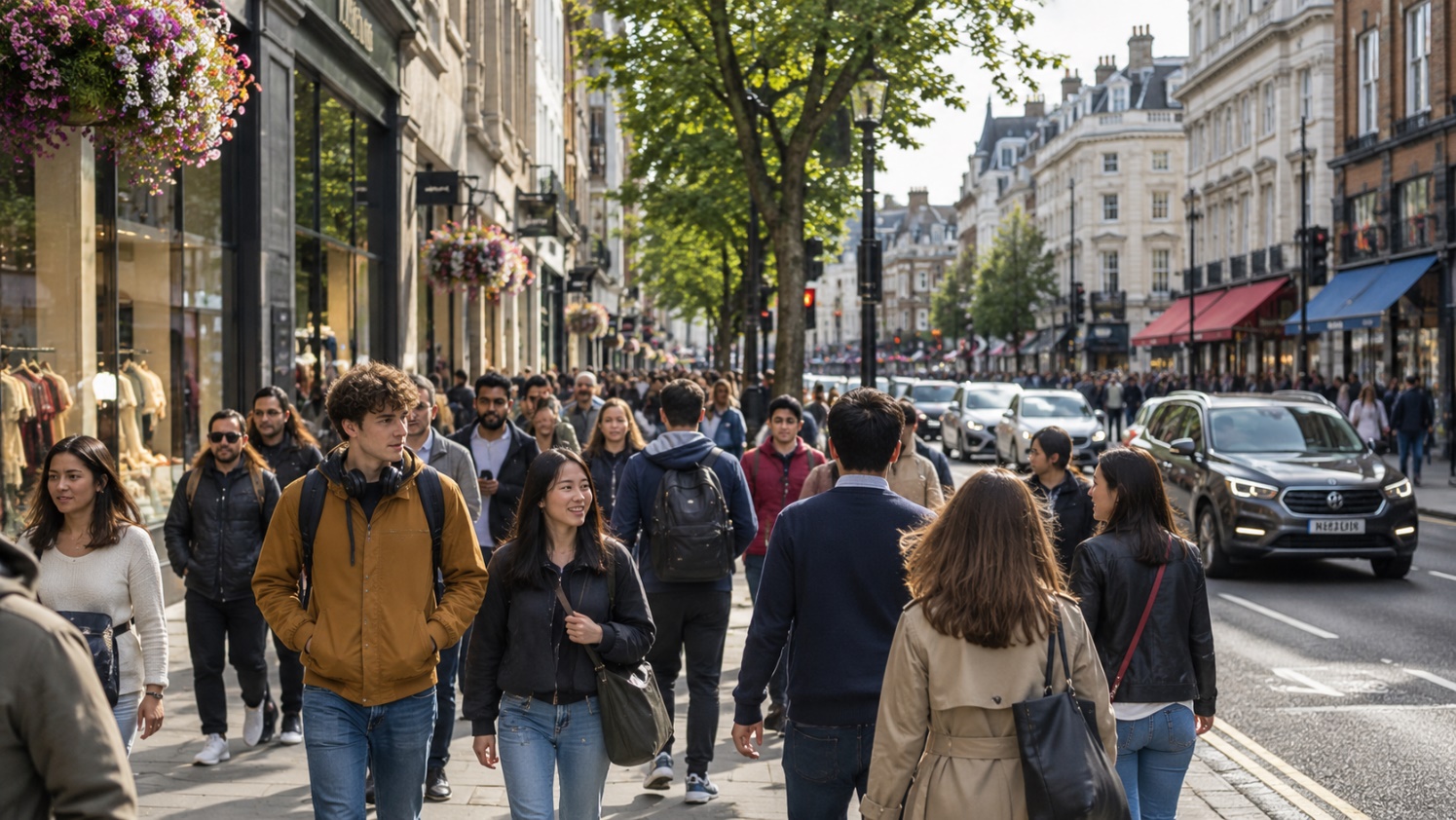
A photo of a busy city street.
Photo card照片里有什么?What is in the photo? Show model answer
照片里有一条大街。大街上有很多人,也有很多汽车和商店。我觉得这里很热闹,因为人很多。
There is a street in the photo. There are lots of people in the street, and also lots of cars and shops. I think it is very lively here, because there are so many people.
Exam tip: Describe only what you can see: use the measure word 条 for 大街 (一条大街) and 也 to add more detail. Then give an opinion with a reason: 我觉得……,因为…….
Edexcel tip: Describe what you can see in the picture first, and read each question carefully for key words.
General conversation
Questions your teacher may ask about this topic.
General conversation你住在哪儿?你喜欢那儿吗?Where do you live? Do you like it? Show model answer
我住在英国南边的一个小镇,离伦敦不远。我很喜欢我住的地方,因为又安静又安全。我家附近有一个公园和一个超市,可是没有电影院。
I live in a small town in the south of England, not far from London. I really like where I live, because it is both quiet and safe. Near my home there is a park and a supermarket, but there isn’t a cinema.
Exam tip: Complex structures: A 离 B 不远, 又……又……, 有…… / 没有…….
General conversation请你介绍一下你的家。Tell me about your home. Show model answer
我家是一个两层的房子。楼下有客厅、饭厅和厨房,楼上有三个卧室和一个浴室。我最喜欢我的卧室,因为不但很安静,而且很漂亮,我可以在那儿看书、听音乐。我家后边还有一个小花园。
My home is a two-storey house. Downstairs there is a living room, a dining room and a kitchen; upstairs there are three bedrooms and a bathroom. My favourite room is my bedroom, because it is not only quiet but also beautiful, and I can read and listen to music there. There is also a small garden behind our house.
Exam tip: Complex structures: 不但……而且…… (不但很安静,而且很漂亮), 最喜欢……因为…… (an opinion with a reason). Use 楼上 / 楼下 and position words (后边) to organise your description.
General conversation你小时候住在哪儿?跟现在有什么不一样?Where did you live as a child? How is it different now? Show model answer
我小时候住在伦敦,那里不但很热闹,而且交通也很方便,可是我们的房子很小。五年前我们开始住在海边,现在的房子比以前的房子大多了,空气也很新鲜。将来我还是想住在海边。
When I was little I lived in London. It was not only lively, but transport was also convenient; however, our house was very small. Five years ago we started living by the sea; our house now is much bigger than our old house, and the air is fresh. In the future I still want to live by the sea.
Exam tip: Complex structures: 不但……而且…… (不但很热闹,而且交通也很方便), A 比 B + adjective + 多了 (现在的房子比以前的房子大多了 – “much bigger than”), ……,可是…… (contrast). Time frames: past (小时候……, 五年前……) and future (将来我还是想……).
General conversation将来你想住在哪儿?为什么?Where would you like to live in the future? Why? Show model answer
去年我去过上海,那里又大又热闹。将来我想住在大城市,因为城市里有很多工作机会,也有很多好玩儿的地方。不过我老了以后,可能会住在农村,因为农村不但很安静,而且空气也很新鲜。
Last year I went to Shanghai; it was big and lively. In the future I want to live in a big city, because there are lots of job opportunities and lots of fun places. But when I am old, I might live in the countryside, because the countryside is not only quiet, but the air is also fresh.
Exam tip: Complex structures: 又……又…… (又大又热闹), 不但……而且…… (不但很安静,而且空气也很新鲜), ……以后 (我老了以后). Time frames: past (去年我去过上海) and future (将来我想……, 可能会……).
More general conversation questions to practise
- 你家附近有什么? (What is near your home?)
- 你喜欢住在海边还是住在城市?为什么? (Do you prefer living by the sea or in a city? Why?)
- 上个周末你在你住的地方做了什么? (What did you do where you live last weekend?)
- 你以前去过哪个有意思的城市? (What interesting city have you been to before?)
- 下个周末你打算在家附近做什么? (What do you plan to do near your home next weekend?)
- 你觉得住在大城市有什么好处,有什么坏处? (What are the advantages and disadvantages of living in a big city?)
Questions about this topic
What does the topic “Home, town, neighbourhood and region” cover in GCSE Mandarin?
It covers where you live and what it is like. The topic can come up in speaking, writing, reading and listening, so learn the vocabulary and practise the speaking questions out loud.
What is the difference between the photo card and the general conversation?
In the photo card task you describe a photo and answer questions about it. In the general conversation your teacher asks questions about the topic, and you should give opinions, reasons and use past, present and future time frames. This page has model answers for both.
How can I make my answers sound more advanced?
Give opinions with reasons, use past, present and future time frames, join ideas with connectives such as 虽然……但是……, and add specific details or examples.